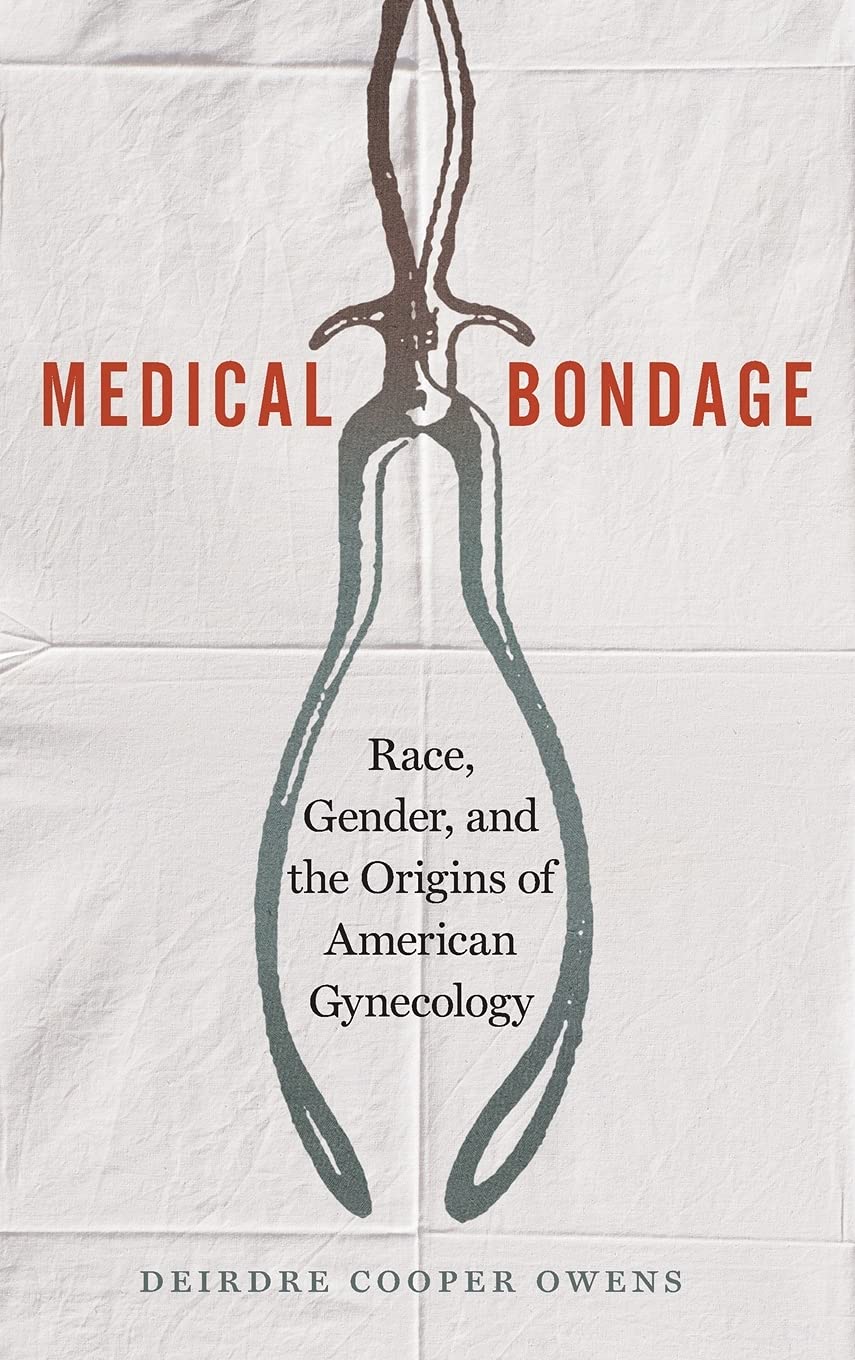
American gynecology would not be what it is today without Black women. In fact, the first women’s hospital in the United States was on a small enslaved persons farm in Mount Meigs, Alabama. In Medical Bondage: Race, Gender, and the Origins of American Gynecology (Medical Bondage), Dr. Deirde Cooper Owens examines the history of gynecological practices and the way that they came about, all while painting a picture of the women who shaped American gynecology. The book investigates both southern plantations and northern urban centers to showcase how nineteenth century ideas about topics such as race influenced relationships between doctors and their patients. Cooper Owens makes two significant arguments about the correlation between slavery and medicine: reproductive medicine was esstential to the maintenance and success of southern slavery and that southern doctors knew enslaved women’s reproductive labor helped them to revolutionize professional women’s medicine. Medical Bondage also, most importantly, retells history from the perspectives of exploited groups. By examining nineteenth century literature and correspondence between doctors and other archival materials, Cooper Owens explains how exploited groups changed the course of American gynecology, ultimately creating a field that would be forever changed by the experiments done on their bodies.
In Medical Bondage, Cooper Owens makes clear the interesting paradox that arose during the development of American gynecology. White male physicians constantly stripped Black women of their humanity, but then used the techniques that they developed on upper class white women. While Black women constantly endured unbearable pain at the hands of gynecologists, white women received similar treatments in a much more comfortable setting. Black women were also gynecological nurses. In many cases, they were once patients and then became trained to assist the physicians (Cooper Owens 72). Physicians, even if they would not outright admit it, knew of enslaved peoples’ importance to the field; “..it was at the heart of their practice and scholarship” (Cooper Owens 28). Similar things can be said about immigrant Irish women’s contributions to American gynecology. Much of the Anglo world’s racial science and popular literature stated that Irish women were able to withstand the same amount of physical as Black women. Because of this, gynecologists expanded their surgical work to include Irish women in the charity wards of northern hospitals (Cooper Owens 93). As seen throughout Medical Bondage, the idea that white men created gynecology is false should be almost fully attributed to Black women, as well as immigrant Irish women.
Dr. Deirde Cooper Owens is an award-winning historian and public speaker. She is a graduate of two historically black colleges and universities (Bennett College and Clark Atlanta University). She earned her Ph.D in history at UCLA, while also having had many prestigious fellowships at the University of Virginia, the American College of Obstetricians and Gynecologists, and as a Big Ten Academic Leadership Fellow. She is the Charles and Linda Wilson Professor in the History of Medicine and Direction of the Humanities in Medicine Program at the University of Nebraska-Lincoln. She is also one of two Black women in the U.S. who heads a medical humanities programs. She is also the Director of the Program in African American History at the Library Company of Philadelphia, the country’s oldest cultural institution. Her experience in the education world mixed with her experience as a Black woman makes her more than qualified to write Medical Bondage. She lies at the intersectionality of Blackness, education, as well as having experience in the Obstetrics/Gynecology field, which combines to make Medical Bondage an interesting and educational read.
In Medical Bondage, Cooper Owens uses a historiographical lens to craft the monograph. She creates a blend of the official documentation of the procedures/experimentations being done, while also giving readers a backstage glance into the cruel feelings exemplified through the letters exchanged by doctors. For example, doctors would constantly discuss “court rulings that highlighted the ‘degraded’ natures of black people in cases of rape . . . and accounts of the biological failings of black people as a degenerate race” (Cooper Owens 22). Her study also expands the work of important historians of medicine, such as Todd Savitt, who only focused on certain parts of race and medicine. Another important aspect of Medical Bondage is Cooper Owens’s incorporation of Irish women’s medical experiences. There has been research done on Irish women’s contributions to “physically challenging, low wage jobs such as factory labor, trash collection, and domestica service” but not any on contributions via exploitation to gynecology (Cooper Owens 91). The study does not focus on the work lives of Irish immigrant women as maids and other occupations, but instead only focuses on the medical impact that gynecology had on them, which further builds upon the problematic history of American gynecology.
The monograph is divided into five different chapters. The subjects of the chapters vary from the birth of American gynecology to sex and medicine to Irish immigrant women and American gynecology. However, a majority detail enslaved peoples’ experiences under differing situations, but they all add to the common theme of the exploitation of certain groups of women to change the course of American gynecology that eventually lead to developing the field as it is today. There are also a variety of figures throughout the text, which include portraits of certain doctors, along with multiple tables inter-looped as well. The addition of these images help readers visualize the information that they are consuming and ultimately add to the message delivered from the book.
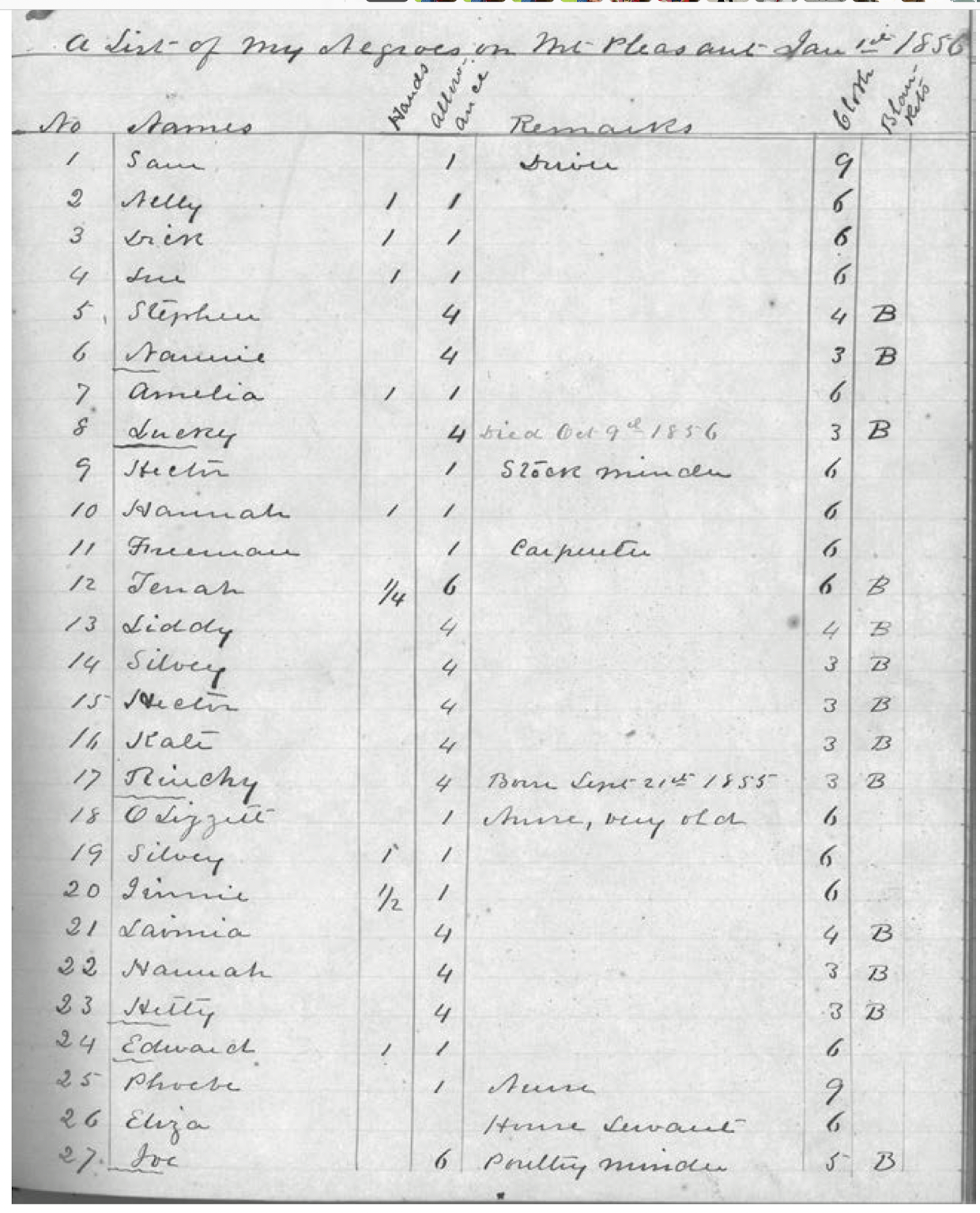
The book begins with detailing the work of Dr. James Marion Sims, who is known as the “Father of American Gynecology.”He owned enslaved peoples who performed duties that enslaved peoples are expected to complete, while also acting as Sims’s surgery nurses. By doing this, they learned the fundamentals of gynecological surgery. The book then explains the difficult lives that black women lived. They were believed to be as strong as black men and were judged solely on their ability to bear children. Doctors wrote supposed articles that were supposedly unbiased, but in reality reflected the scientific racism of the times. They included the experiments done on certain women, such as an enslaved person named Mary, who had her womb removed. After she died, her womb was preserved and displayed at a medical museum, which just proved that “even postmortem, some black women seemed unable to escape the gaze and ownership of white men” (Cooper Owens 20). Cooper Owens’ reframing of Sims is important to the development of her arguments because it debates the emergence of certain gynecological practices that Sims was highly praised for. While he was able to change the field, he did so in an incredibly abusive way.
The first chapter contextualizes American medicine, while starting to focus on gynecology. Even when gynecology was not an established branch of medicine, enslaved patients were still crucial in physicians’ work. The second chapter provides an overview of enslaved women’s reproductive medical needs and how the larger number of Black women who needed care helped grow the gynecology field. The third chapter investigates white southern male doctors’ relationships with black female patients and the medical field in general. They would abuse and constantly rape their patients. Many of these men believed that they were powerful patriarchs in any medical field that they were present in, whether it be an enslaved peoples hospital or a southern medical college. The fourth chapter partially switches topics by focusing on poor Irish immigrants’ medical experiences and explains how they had somewhat similar experiences to Black women when it came to medical experimentation in developing fields, especially gynecology (Cooper Owens 89). The last chapter explores how doctors perceived Blackness through a certain lens that portrayed them as different, but also the same (Black and white women had basically the same medical procedures) (Cooper Owens 108). Overall, Medical Bondage touchfully touches on Black and Irish immigrant women’s connections to developing medical fields through the use of scientific literature and less formal communications.
Medical Bondage is one of the most educational and strongly-written books that I have read recently. Cooper Owens presents the information in a strategic way that allows readers to fully understand the importance of the content being taught. The goal of the book was to get the information across about an underrepresented topic through the voice of exploited populations, which Cooper Owens seamlessly achieves. The strongest point of Medical Bondage is how well it puts forward information to its readers. Cooper Owens does this by using a strong and concise writing style that guides the readers towards the conclusions that Cooper Owens is making herself. The inclusion of several images and graphs also helps readers further grasp the information that they are reading. To fully understand a topic, I usually have to read the scholarly literature multiple times. However, after reading Medical Bondage, I feel as if I could entertain an hour long discussion with other people on this topic and help them understand it better. Through this monograph, Cooper Owens creates the basis for important conversations on this topic.
While Medical Bondage is overall a well-written monograph, there is one section of the book that deviates from this conclusion. The majority of the book is about Black women and their contribution to American gynecology. However, Cooper Owens also includes a chapter about the importance of immigrant Irish women in regards to American gynecology. While their stories are important, it seems like the chapter was awkwardly tacked on at the end. There was not a smooth transition between the topics; the book awkwardly leaped from discussion of Black women to discussion of immigrant Irish women. It also felt more drastic because the previous parts of the book were so well written. While the stories of immigrant Irish women are still necessary to be told, Cooper Owens could have interwoven the ideas of their additions to American gynecology throughout the book to make the jump from Black women to immigrant Irish women more smooth. Medical Bondage is a necessary read for those who are patient about reproductive health, or any medical field in general. It finally gives a voice to people who have been abused throughout history, while also exposing the hypocrisy within American gynecology. We all have Black women to thank for our healthcare today.
Literature Cited: Cooper Owens, Deirdre. Medical Bondage: Race, Gender, and the Origins of American Gynecology. University of Georgia Press, 2017.
https://www.goodreads.com/book/show/34689315-medical-bondage (image)