Motherhood can be a controversial topic yet is also held as a gold standard of womanhood. This is not only complicated by diversity of individuals and life goals, but the pressure that is put on mothers and the shame associated with mothering in a particular way or rejecting motherhood entirely. Discussion of motherhood is much more prevalent than fatherhood, with discourse more strongly focused on the different aspects of what it means to be a mother. This is the case because of the widely accepted notion that women hold more responsibility as a parent while men are more or less excused. Critical discussions of motherhood can be controversial because of these norms and expectations of gendered parental roles and childcare that are entrenched in policy, history, and day to day life. Nevertheless, it is important to engage with this topic as individuals and a collective to shed light on the private and public role that motherhood plays on mothers themselves, as well as shaping motherhood down the line.
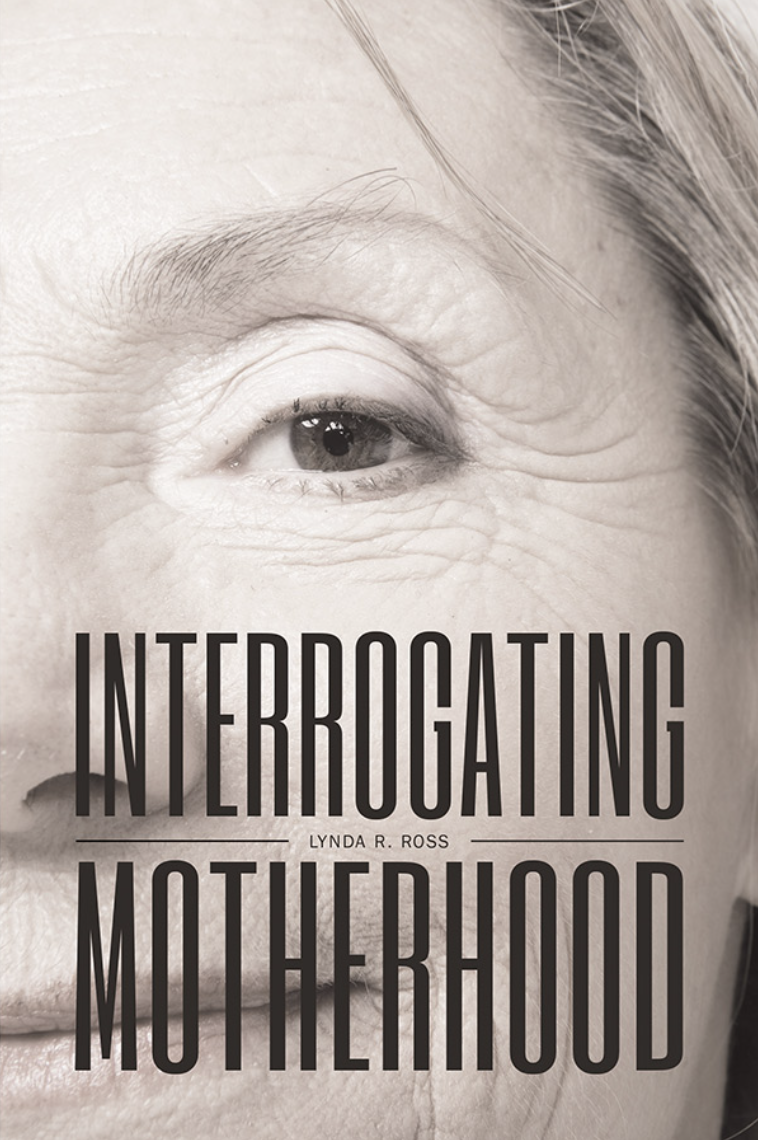
Lynda Ross is an associate professor at Athabasca University, in Athabasca, Canada. She is a professor in the Women’s and Gender Studies department and teaches courses about violence against women, and women and psychology (“Lynda R. Ross”). A primary interest of hers is the social construction of motherhood (“Lynda Ross and Shauna Wilton”). In her monograph, Interrogating Motherhood, Ross sets out to explore and explain the context in which motherhood in Western society rests, particularly in the United States.
Interrogating Motherhood’s central argument is that women’s lives are made more complex and challenging by motherhood, because they receive little support considering the immense physical and emotional toll they go through. Ross states that “although childbirth is a universal biological event, it is obviously not independent of the economic, social, and cultural context in which it occurs” (Ross 70), and the result is that the experience of mothering is a very isolating one (127). In her book, Ross outlines the societal structures that emphasize the values place on mothering, but not mothers themselves. Her book’s eight chapters that walk through this argument are titled “The Study of Motherhood,” “Reflections on Motherhood: Theory and Popular Culture,” “Paid Employment and the Practice of Motherhood,” “Enabling Policies: In Theory and in Practice” (guest authored by Shauna Wilton), “Mothering and Poverty,” “Mothers, Mothering, and Mental Health,” “’Other’ Mothers, ‘Other’ Mothering,” and “The Future of Motherhood.” In these chapters she outlines how attachment theory, employment of women, policies surrounding maternity leave and paternity leave, mothers who struggle with parenting because of poverty or mental health, and mothers that face additional obstacles because they fall outside of the cookie cutter “good mother.”
Ross does not employ her own methodology in this book, but rather draws information from a plethora of relevant research and literature. She weaves this collection of facts and statistics from a variety of sources together to create view of motherhood in America that has more breadth than any of the individual works could reasonably provide. Alongside other authors, she draws from four of her own papers on attachment theory and postpartum depression to contribute her own expertise to the narrative. The second chapter of Interrogating Motherhood offers a history on the theory surrounding motherhood, and in it, Ross unpacks how attachment theory has contributed to the norm that maternal selflessness and ever presence is required for the successful raising of well cared-for children (18), partially because of the way theory and the media are influenced by external societal pressures (29). She illuminates that the accepted notion of what a “good mother” is does not assist mothers but instead leaves them without support (83). At the same time, this demonizes parents who do not fit into the narrow white, middle-class, heterosexual, and married mold (104), and further perpetuating the stereotype and expectation that mothers should be the primary caregivers for their children.
Although scholarly and offering a historical survey on motherhood theory, this book is extremely accessible to readers. In addition to being available online as a free PDF, this text is well organized and covers many diverse but not mutually exclusive topics related to motherhood, parenthood, and the historical and social forces that have shaped raising a child as a highly complex and gendered process. Ross also carefully balances her evidence within larger context and narratives within each chapter to paint a holistic picture of the dynamics impacting women. For example, in the chapter “Paid Employment and the Practice of Motherhood,” Ross contrasts the United States’ minimal maternity leave with that of Norway’s (45) to highlight how the difference in policy reflects how mothers are valued. Viewing this topic through a wide lens is essential due to the interrelated nature of its content, in which Ross executes by organizing the text’s content into well-defined categories.
However, Interrogating Motherhood is somewhat held back by its breadth; since almost all of the information brought to readers’ attention is from outside of Ross’s personal research, there are a staggering amount of topics introduced that are not given equal depth and significance in the greater context of the book. For example, her commentary on how attachment theory supports norms of gender roles in parenting involves discussion of how constructions of Western society have influenced attachment style theory (125), and how this scholarly support has helped perpetuate these norms through media (29). On the other hand, when she attempts to summarize the impacts of the “anxiety, isolation, and sense of overwhelmed” that mothers may face in general, her conclusion is simply that these feelings “are not good for women” (127). Because of this, Interrogating Motherhood is essentially a literature review on policies and norms surrounding motherhood in the United States. Compared to the depth of analysis outlined in the introduction to the book, the text fails to interrogate motherhood beyond basic facts and their immediate outcomes.
Something that could have contributed to the strength of the book is the consideration of women who feel isolated from motherhood. Ross pinpoints the forced obligation of women’s responsibility to their children that some mothers must grapple with (114), but this leaves room for discussion of women who choose not to become mothers or regret becoming mothers. In addition, this book only focuses on Western society’s motherhood norms and expectations (1). The author acknowledges this, but the book could benefit from more cultural context, particulary in the discussions of family and gender roles.
Ross’s Interrogating Motherhood sets out to unpack the nuanced, personal, and often controversial topic of what it means to be a mother, and how the idea of a “good mother” cannot be enacted in today’s society in a way that is supportive of a mother as well as her children. She covers a lot of ground in her discussion throughout the text and provides a well-supported argument. However, her lack of personal contribution to the research discussed reveals herself in her hesitance to jump into describing a more holistic perspective on the challenges mothers face beyond her two main areas of expertise: attachment theory, and mental health in pregnancy and motherhood (in chapters 2 and 6, respectively, as well as the introductory and concluding chapters). However, her call to action at the conclusion of the book is compelling; “a paradigm shift in how we understand mothering and motherhood is needed” (124) beyond essential policy shifts that need to occur, so that mothers are able to receive support, care, and attention alongside their children.
Works Cited:
“Lynda R. Ross.” CSPI, 1 Apr. 2010, https://www.canadianscholars.ca/authors/lynda-r-ross.
“Lynda Ross & Shauna Wilton.” JourMS, 11 Aug. 2016, https://jourms.org/lynda-ross-shauna-wilton/).
Ross, Lynda R. Interrogating Motherhood. Athabasca University Press, 2016.
This book sounds really interesting! I feel like we’ve talked about motherhood within the context of other issues like feminism or abortion, but it’s such a broad and complex topic that’s hard to due justice so I’m sure this was a fascinating read. While reading your review, I was thinking about the reading we did on the different depictions of black women and how all of those images were related in some way to motherhood. There’s so much pressure on women to be “good” mothers but there is so little support given to women to allow them to do so. It would be interesting to compare this monograph to studies on motherhood in other countries. I bet there would be a lot of similarities.