Written by Anna Newman for the website Jezebel
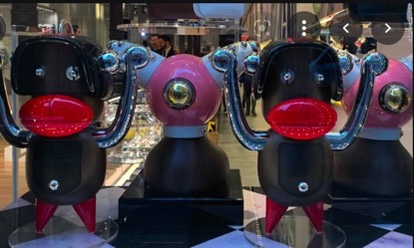
Fashion changes the world by controlling the definition of beauty. Designers like Prada, Chanel, Yves Saint Laurent, and Marc Jacobs hold positions of power as they are all high-fashion industries, catering to the materialistic needs of the white, upper-class. However, with this position of power comes global publicity and attention, which can be good and bad. One designer in particular, Prada, dug themselves into a hole of backlash after displaying a gadget with racist connotations in the window of the SOHO store in Manhattan. This gadget appeared to resemble the Golliwog, which was a blackface caricature in the 19th century. Given that Prada is a world-recognized and respected retailer, the world was shocked by this decision to display a gadget with references to “Little Black Sambo” and discriminatory black facial features. In response to this criticism, Prada took down the display, rightfully so; however, simply taking down the display was not enough to reconcile the damage that the retailer had caused. Prada decided to form a council within the company focused on diversity and inclusion for their clothing, accessories, and models. To go the extra step, Prada sent the proceeds from the remaining gadgets to a New York based non-profit that advocates for racial justice. In conclusion, the danger of the fashion industry is that they hold so much power and authority in determining what the beauty standards are and what the trends are, which means that people idolize these companies; when these companies begin suggesting racist ideas and connotations about their products, that is when we, as citizens, should start questioning where this position of power is coming from. Why does the high fashion industry have the authority to deem what is considered beautiful and trendy? To answer this question, we must refer to Foucault’s stance on how power is defined. Foucault believes that power is “multifaceted [and …] not just top-down” (Foucault) which means that even though we may think that Prada, being high ranking and respected worldwide, knows what real beauty and fashion trends are, true beauty is determined within society on a fluid level; it something that is ever changing and subjective, a concept that cannot be determined by a single company or power.
Relating to challenging the norms, the Three to Infinity Movie about getting rid of gender labels in order to live a happy and boundary- free life for trans and queer people. The movie’s message is about challenging the norms of a binary society, recognizing that one does not have to be either male or female, realizing that you do not have to be the same gender you were at the time you were born, and accepting that gender can change and fluctuate throughout your life. This idea of an ambiguous and amorphously genderless society relates to the fashion and beauty construct that large franchises have created. These physically and monetarily unattainable fashion standards have been labeled and idolized by the industry as the sole way in which one can be beautiful, which creates discrimination on the socioeconomic and appearance level. Additionally, Marilyn Wann published an article called The Fat Studies Reader which discusses how the weight loss industry is worth 58.6 billion dollars and it feeds off of the public’s desire for a smaller, more model-like body. The weight loss industry and the high fashion industry go hand in hand; without the high fashion industry, the weight loss industry struggle to find an incentive for people to get involved with losing weight because the attractive, trendy, and chic styles would no longer be modeled on the bodies of skinny, white women and the end goal would be masked from the public. In conclusion, high fashion and social media has a significant impact on how people perceive themselves which creates tension and standards which are unachievable, demonstrating the self-serving and money seeking nature of the workplace.
Hey Anna! I really enjoyed this post. I wasn’t aware of this incident, and needed to educate myself further. I went down a rabbit hole of seeing more of this in the high end fashion industry. For example, Gucci released a sweater that had a turtle neck that also resembled black face in 2018. Celine refused to dress black celebrities unless their stylist was white in 2020. It makes you think about exclusive these huge companies really are even in the modern day, and how their audience is really only targeted to white, rich people. It is a shame because they have so much influential power, but are not fully representative of society. Fortunately, I was able to find that most of the companies have now educated their employees, hired black designers and created branches in their company to work on their inclusivity. I think the industry has a long way to go, but you have made me think differently about how I view these companies. Great work!
I love this topic! It is so true, the fashion industry controls the conception of beauty. Especially the designers, they are commonly know to be the prime example of beauty and fashion. What they say goes and they set the standard for the rest of the fashion industry. They set unfair and unattainable standards of what they consider idealistic beauty. Social media has definitely made the problem worse because it has allowed companies and industries to have a broader range of people that they can reach. So what could those industries do to start creating realistic beauty, how can they start promoting individuality as beauty instead of a specific standard.