Written for Feministing magazine.
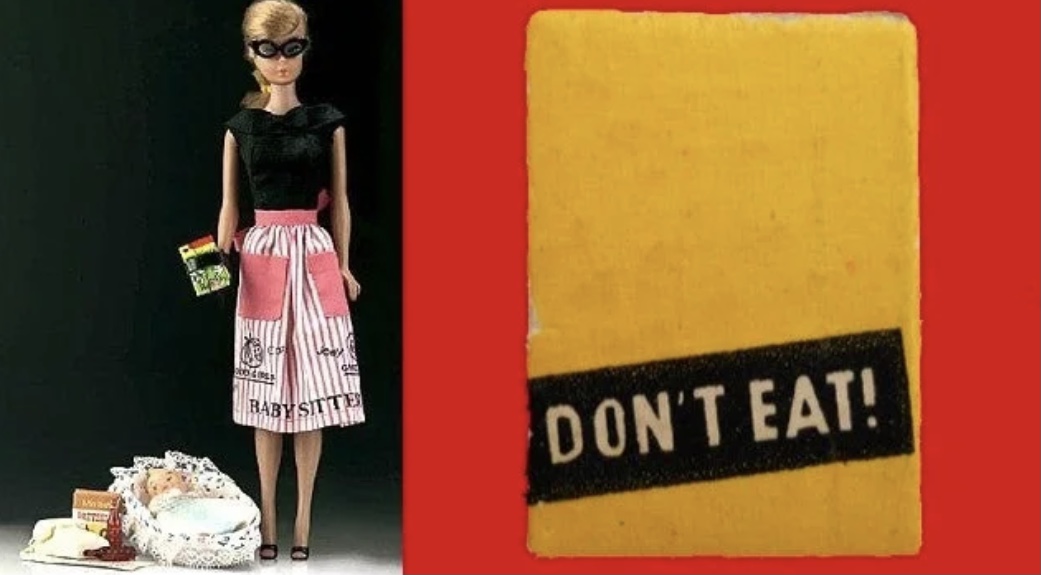
The Barbie industry serves as an integral part of many young people’s childhoods and continues to be an influential brand. Up until these last two decades, the trademark has kept selling an item that lacks real representation- one that is appearingly not meant for everyone. One of the most notable red flags with this brand is the unrealistic model of body anatomy that is set before young generations. While recent strides to become a trademark that is known as more inclusive and empowering have been ongoing, there is still an entire history of wrongful messages and branding to be seen in order to account for its controversial narrative.
A prime example (and one of many) is none other than the “Babysitter Barbie” ad, which includes the words “DON’T EAT” and features Barbie holding a book entitled “How To Lose Weight.” Mattel, the company behind the entire franchise, promotes a harmful lesson to an incredibly impressionable audience. A young person who comes across this graphic becomes instilled with the need to already be regulating an area of their lives in order to be seen as valid from the golden standard Barbie places. This becomes a confusing take on what is supposed to be a franchise dedicated to lifting girls up.
Not only does this ad present a norm that should not be reiterated to a young group eager to view Barbie as a role model, but it reinforces poor beliefs regarding body image. Any advertisement that emphasizes a problem before one might even be aware can change someone’s entire perception of what is “socially acceptable” for them to look like. In this case, Barbie’s message can unknowingly kickstart unhealthy eating habits and overall insecurity, and young people may not be aware of the root of where it all began until much later.
The positive impacts the Barbie industry has had on its audience is not to be discredited; however, regarding topics of feminism, it can be noted that Barbie’s history of branding has not always been helpful to that cause. Luckily, Mattel has made strides in inclusivity and Barbies is much more aware today. It is essential that brands are conscious of the content they present to audiences, especially when it can negatively impact the confidence of young girls and their bodies. The Barbie franchise missed the mark on this one.
I grew up playing with Barbies and never realized the role they played in my life. It’s very unfortunate that children who play with Barbies grow up and develop unhealthy eating habits and insecurities and do not notice the role their dolls/toys played in their development. The babysitter reading a book titled “How to Lose Weight” to the baby is crazy to me! This doll reveals a lot about the expectations for the female body during the 60s.
My Barbie collection consisted of the classic Barbie (blonde hair, slim figure, pale skin) with different outfits and careers. I was happy to see that Barbie was able to pursue any career she wanted to that I did not realize the lack of racial and body diversity within the Barbie Industry. I am happy to see that there is now much more diversity in the new Barbie collections (different hair textures, skin color, body figure, and more). Mattel still has a lot of work to do as they release new dolls, and I am excited to see the new changes and impact it will have on future generations.